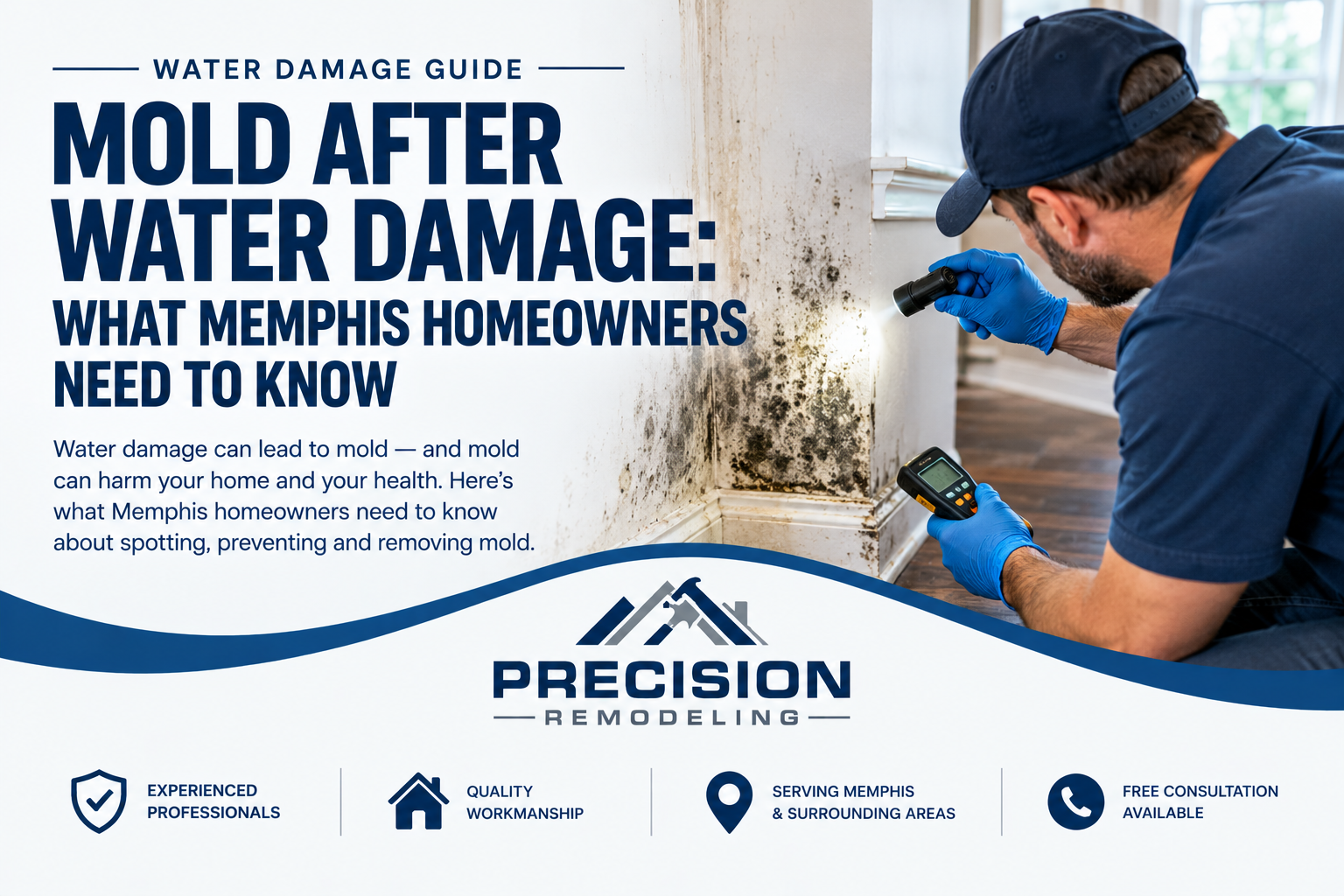
The water is gone. The carpet looks dry. Everything seems fine, until three weeks later there’s a musty smell coming from somewhere you can’t quite locate. That’s how most mold problems actually start, quietly, after the water damage itself already seemed handled.
This guide covers the real timeline of mold growth after water exposure, where it hides in Memphis homes specifically, and how to tell the difference between a problem you can clean yourself and one that needs a professional.
How Fast Does Mold Actually Grow?
This is the part most homeowners underestimate. Mold doesn’t need weeks to become a real problem, it needs days.
According to the Environmental Protection Agency, mold can begin growing within 24 to 48 hours after materials get wet, and it spreads faster in warm, humid conditions, exactly the environment Memphis summers create. That short window is why the first two days after any leak, flood, or burst pipe matter more than almost anything else in the process.
By the one-week mark, mold that started behind a wall or under flooring has often spread far beyond where the original water damage occurred. This is the single biggest reason DIY drying attempts fail: people dry what they can see and miss everything they can’t.
Where Mold Hides After a Flooded Basement
A flooded basement creates the perfect combination for mold: standing water, limited airflow, and materials like drywall and carpet padding that hold moisture for far longer than they appear to on the surface.
The Spots Homeowners Miss
Behind baseboards, under carpet padding, inside wall cavities, and behind furniture pushed against damp walls are the most commonly missed areas after a basement flood. The surface can look completely dry while moisture sits trapped just behind it.
Signs of Hidden Water Damage
A musty smell that doesn’t fade, discoloration on drywall or ceiling tiles, peeling paint, or a slight give when you press on flooring are all signs pointing to moisture that wasn’t fully addressed the first time around. Any one of these on its own is worth investigating before it becomes a bigger water damage repair project.
Water Mitigation vs. Water Remediation vs. Water Damage Repair
These three terms get used interchangeably online, but they actually describe different stages of the same process, and knowing the difference helps you understand what you’re actually paying for.
Water Mitigation
Water mitigation is the first response step, stopping the water source, extracting standing water, and beginning the drying process to prevent further damage. This happens within the first hours after water damage is discovered, and it’s the step that determines how bad everything after it turns out to be.
Water Remediation
Water remediation picks up where mitigation leaves off, addressing what the water left behind, including mold, bacteria, and contamination, especially after flooding involving outside water sources. A water mitigation company that stops after drying without addressing this step is only doing half the job.
Water Damage Repair
Water damage repair is the rebuilding phase, replacing drywall, flooring, insulation, and anything else the water compromised beyond saving. This is the visible, final stage, but it only works correctly if mitigation and remediation happened properly first.
What a Real Water Damage Restoration Process Looks Like
A complete water damage restoration service follows a specific order, and skipping steps is exactly how mold problems resurface months later.
Extraction comes first, removing all standing water as fast as possible. Industrial drying follows, using equipment far more powerful than box fans and a dehumidifier from the hardware store. Moisture testing behind walls and under flooring confirms the space is actually dry, not just dry to the touch. Only then does mold prevention treatment and final repair begin.
A restoration company water damage teams call in should walk you through every one of these stages, not just show up, run a fan for a day, and call it finished.
DIY Water Damage Cleanup: What’s Safe and What Isn’t
Not every situation needs a professional crew. A small, contained spill cleaned up within hours, with no standing water and no porous materials soaked through, is often fine to handle yourself.
A water damage cleanup near me or water cleanup near me search makes sense once water has been sitting for more than a few hours, covers a large area, or came from an unclean source like a sewer backup or floodwater. Contaminated water categories require professional handling, not just for the cleanup itself but for the health risk involved in doing it without proper protective equipment.
If you’re already noticing a musty smell or visible discoloration by the time you’re searching water damage repair near me, the window for a simple DIY fix has likely already closed.
Choosing Between Water Restoration Companies
Not all water restoration companies offer the same scope of service, and that gap matters more than price when mold risk is involved.
What to Ask Before Hiring
Confirm whether the company handles the full process, mitigation through final repair, or only the drying portion. Some water restoration services stop once equipment is removed, leaving you to find a separate contractor for the actual rebuild. Ask specifically how they document moisture levels, since “looks dry” and “tested dry” are not the same thing.
Water Mitigation Company vs. Full Restoration Company
A water mitigation company focused purely on emergency extraction and drying is useful for the first response, but if you’re dealing with anything beyond a minor spill, working with a company that also handles water damage restoration, remediation, and rebuild under one contract avoids the handoff gap where problems tend to slip through.
Flood Restoration After Memphis Storms
Memphis storm season brings a specific version of this problem: sudden, heavy rain overwhelming drainage faster than older homes were built to handle.
A flood restoration near me search spikes every time a major storm rolls through the area, and response speed matters more here than almost anywhere else on this list. Standing floodwater, unlike a clean pipe leak, often carries contaminants that make DIY cleanup genuinely unsafe, not just inconvenient. Flood restoration companies near me should prioritize active flooding situations over already-scheduled work, since the mold timeline doesn’t pause for a company’s regular calendar.
What Most Water Damage Guides Leave Out
A few things rarely get covered in typical mold and water damage content, and they matter for real decision-making:
- Health-sensitive households matter more here than most guides acknowledge. According to the CDC, people with asthma, allergies, or compromised immune systems may be more sensitive to mold exposure, which is worth factoring into how quickly you act, not just whether you eventually address it. This isn’t medical advice, if anyone in the home is experiencing ongoing symptoms, that’s a conversation for a doctor, not a blog post.
- Insurance documentation timing matters enormously. Photographing damage immediately, before any cleanup begins, protects your claim in ways that after-the-fact photos simply can’t.
- HVAC systems frequently get overlooked after water damage. If ductwork or the system itself was exposed to moisture, mold spores can circulate through the entire home long after the original wet area looks fine.
- “Dry to the touch” is not the same as actually dry. Materials can feel dry on the surface while still holding enough moisture inside to support mold growth for weeks. Professional moisture meters catch this; your hand doesn’t.
When to Call Precision Remodeling for Water Damage
Whether you’re dealing with a flooded basement after a storm, a slow leak that’s been building for weeks, or you’re already seeing signs of mold and need a full water damage restoration response, Precision Remodeling handles the entire process under one team, mitigation, remediation, and final repair, instead of handing you off between separate companies for each stage.
We document every step for insurance purposes and prioritize active water damage situations over routine scheduling, because the mold timeline doesn’t wait. See our full water damage restoration services, or reach out through our contact page for an immediate response.
Frequently Asked Questions
How soon after water damage can mold start growing?
Mold can begin growing within 24 to 48 hours after materials get wet, according to the EPA. This is why fast extraction and drying matter more than almost any other step in the process.
How do I know if my water damage needs professional restoration or DIY cleanup?
Small, contained spills cleaned up within a few hours are usually fine to handle yourself. Water that’s been sitting longer, covers a large area, or came from a contaminated source needs professional water mitigation and remediation.
What’s the difference between water mitigation and water damage restoration?
Water mitigation is the immediate response, stopping the source and drying the area. Water damage restoration is the complete process, including mitigation, remediation of contamination or mold risk, and final repair.
Can mold grow even if the area looks completely dry?
Yes. Materials can feel dry on the surface while still holding trapped moisture inside walls, flooring, or padding, which is exactly where mold growth often starts undetected.
Is a flooded basement always a mold risk?
Not always, but it’s high risk due to limited airflow and materials that hold moisture, like carpet padding and drywall. Fast, thorough drying significantly reduces the chances of mold developing.
Will homeowners insurance cover water damage restoration?
Coverage depends on the cause and your specific policy. Sudden events like a burst pipe are often covered, while gradual damage from long-term leaks may not be. Documenting damage immediately helps support any claim either way.
How do I choose between water restoration companies near me?
Ask whether they handle the full process from mitigation through final repair, how they document moisture levels, and whether they prioritize active emergencies over scheduled work.
Don’t Wait for the Smell to Confirm What You Already Suspect
Water damage rarely announces itself as a mold problem right away. It shows up quiet, a slightly damp smell, a stain that keeps returning, a spot on the ceiling that seems to grow a little more each week. By the time it’s obvious, the window for a simple fix has usually already closed.
Precision Remodeling has spent over 10 years helping Memphis homeowners respond fast and correctly to water damage, before a manageable problem turns into a mold remediation project. We handle the entire process under one team, so nothing slips through the gap between drying it out and actually fixing it.
Call 901-258-2517 or request immediate water damage assistance today. The sooner we get to it, the less it costs, and the less there is to worry about.