A crack in the wall doesn’t tell you much on its own. Neither does a soft spot, a bulge, or a stain that keeps coming back no matter how many times you paint over it. The real question homeowners actually need answered is whether that’s a patch job or a full wall replacement, and guessing wrong in either direction gets expensive.
This guide walks through every wall type you’re likely to run into, drywall, plaster, basement, retaining, and load-bearing, and gives you a clear way to tell which side of that line your problem falls on.
The Quick Test: Repair or Replace?
Before getting into specifics, here’s the general rule that applies across almost every wall type on this list.
If the damage is isolated, cosmetic, and the structure underneath is dry and solid, repair almost always makes sense. If the damage is spreading, recurring, or touching something structural, moisture-related, or load-bearing, replacement is usually the safer and cheaper long-term call, even though it costs more upfront.
Keep that rule in mind as we go section by section.
Interior Drywall: Repair or Replace?
When a Section of Drywall Is Enough
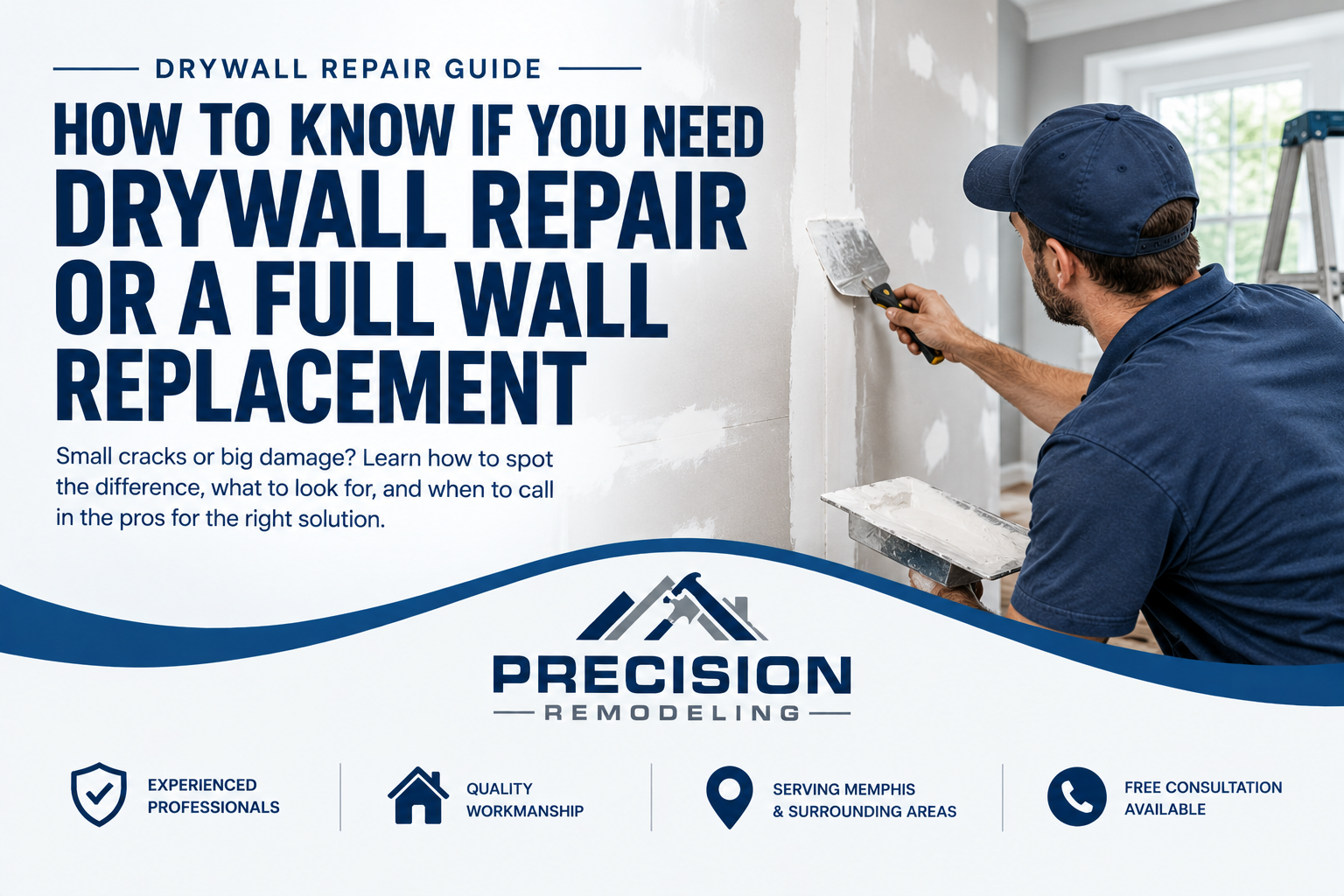
Most drywall damage, a doorknob hole, a small water stain, a crack along a seam, doesn’t require touching the whole wall. You can replace a section of drywall by cutting back to the nearest studs, patching, and blending the texture. This is the most common and most affordable fix on this entire list.
When the Whole Wall Needs to Go
Dry wall replacement across a full wall makes sense when damage covers a large area, when mold has spread behind multiple sections, or when the drywall has absorbed enough moisture that it’s soft or crumbling in more than one spot. Patching a wall that’s failing in five places instead of one just delays the inevitable, and costs more in labor over multiple visits than doing it once, correctly.
Ceiling Drywall Deserves Extra Caution
Ceilings behave differently than walls because gravity works against you. If you need to replace ceiling drywall, especially after a roof or plumbing leak, don’t assume a patch will hold. Sagging ceiling drywall has already absorbed water weight it wasn’t built to carry, and a patch on a compromised ceiling is a short-term fix at best. The same logic applies if you need to replace sheetrock ceiling sections after any kind of overhead leak, check the insulation above it too, since wet insulation left in place will just re-soak the new drywall.
Plaster Walls: Patch, Repair, or Switch to Drywall?
Older Memphis homes, especially anything built before the 1960s, often still have original plaster walls instead of drywall. This changes the repair-vs-replace math.
Replace Plaster Walls With Drywall
Plaster is more labor-intensive to repair than drywall, and matching old plaster texture gets harder every year as fewer contractors specialize in it. Many homeowners choose to replace plaster walls with drywall entirely once damage becomes widespread, since it’s often more cost-effective long term than continuing to patch failing plaster section by section.
Replace Plasterboard Section
For smaller, isolated damage, you can sometimes replace plasterboard section by section rather than committing to a full wall conversion, especially if the rest of the plaster is still sound and you’re not planning a larger renovation.
If you’re weighing whether to keep patching or finally replace plaster with drywall across a whole room, the tipping point is usually frequency. One repair every few years is normal wear. Multiple repairs in the same room within a year or two means the underlying wall material has run its course.
Load-Bearing Walls: A Completely Different Category
Everything above this section is cosmetic or moisture-driven. Load-bearing walls are structural, and that changes everything about how you approach them.
Replacing a Load Bearing Wall With a Beam
Replacing load bearing wall with beam construction is how homeowners open up a floor plan, combining a kitchen and living room, for example, without compromising the structure holding the house up. This is never a DIY project. It requires a structural engineer to calculate the correct beam size and support, plus a permit in almost every jurisdiction.
Load Bearing Beam Replacement Cost
Load bearing beam replacement and replace load bearing wall with beam cost both depend heavily on the span being supported and whether steel or engineered lumber is used. This is consistently one of the more expensive line items on this entire list, and it’s not a place to shop for the lowest bid. According to guidance published by the National Council of Structural Engineers Associations, any modification to a load-bearing element should be reviewed by a licensed structural engineer before construction begins, regardless of how straightforward the change looks on paper.
Basement Wall Replacement: Structural vs. Cosmetic
Basement walls fail differently than interior walls because they’re fighting soil pressure and moisture constantly, not just occasional damage.
Bowing, horizontal cracking, or a wall that’s visibly leaning inward are all signs pointing toward basement wall replacement, not a cosmetic patch. Vertical hairline cracks are usually normal settling and rarely need more than monitoring. Horizontal cracks are a different story entirely, they often mean soil pressure is actively pushing the wall out of position.
If you’re searching basement wall replacement near me, get a foundation specialist to inspect it before assuming the fix is purely cosmetic. Memphis’s clay soil expands significantly with moisture, which is exactly the kind of pressure that causes this type of structural wall failure over time.
Retaining Wall Replacement
Outdoor retaining walls fail for entirely different reasons than indoor walls, mostly drainage and material breakdown over time.
Signs You Need Retaining Wall Replacement
Leaning, bulging, or a wall that’s visibly separating from the soil behind it all point toward retaining wall replacement rather than a patch. A wall doing its job correctly stays straight and drains water through it, not just around it.
Retaining Wall Replacement Cost
Retaining wall replacement cost and cost of replacing a retaining wall depend heavily on material, height, and length. A short segmental block wall costs far less than a taller engineered wall requiring drainage systems and reinforcement behind it.
Replace Railroad Tie Retaining Wall
Older properties often still have railroad tie retaining walls, and these are among the most common walls needing replacement simply due to age. If you need to replace railroad tie retaining wall construction, know that the ties themselves typically rot from the inside before failure becomes visible from the front, so a wall that looks fine can already be structurally compromised.
Wall Tie Replacement
Wall tie replacement refers to the metal or masonry ties connecting a wall’s outer and inner layers, most common on older brick construction. Failed wall ties show up as bulging or separation between wythes of brick, and it’s a repair that gets significantly more expensive the longer it’s ignored.
If you’re comparing options for retaining wall replacement near me, ask specifically about drainage design, not just materials. A beautiful new wall built without proper drainage behind it fails again within a few years for the exact same reason the old one did.
Bathroom Walls: Replacing Shower Tiles and Drywall
Bathrooms are their own category because moisture exposure is constant, not occasional. When replacing shower tiles and drywall, the drywall behind the tile is almost never standard drywall if the bathroom was built correctly, it should be moisture-resistant board or cement backer board.
If you’re pulling tile and finding standard drywall or, worse, soft and crumbling material behind it, that’s usually a sign the original installation cut corners. This is one of the most common hidden problems homeowners discover mid-renovation, and it’s exactly why a full inspection before retiling matters more than most people expect.
Mobile Home Wall Panels
Mobile and manufactured homes use different wall construction than site-built houses, and repairs need to match that.
Mobile home replacement wall panels aren’t interchangeable with standard drywall in most cases, manufactured homes typically use thinner, specifically sized panel systems. Trying to patch a manufactured home wall with standard drywall techniques often creates more problems than it solves, since the wall cavity, insulation, and vapor barrier setup differ from site-built construction.
The Hidden Cost Homeowners Forget: Electrical
Almost every wall replacement project, drywall or otherwise, runs into electrical work somewhere along the way. If outlets, switches, or wiring are exposed or need to be relocated during the project, factor in electrical outlet replacement cost separately from the wall material itself. This is one of the most commonly underestimated line items in DIY wall projects, since it requires a licensed electrician, not just a drywall contractor, and skipping that step is a code violation waiting to happen.
What Most Wall Repair Guides Get Wrong
A few things rarely show up in typical repair-vs-replace content, and they matter for real decision-making:
- Recurring damage in the same spot almost always means the root cause, a leak, ventilation issue, or structural movement, hasn’t been fixed. Replacing the wall again without addressing the cause just resets the timer.
- Insurance coverage sometimes applies to wall damage from a sudden event like a burst pipe, but rarely covers gradual damage from long-term moisture or settling. Documenting when damage first appeared matters for a claim.
- Permit requirements apply to load-bearing wall changes and many basement wall repairs, not just full additions. Skipping this step on structural work can create real problems at resale.
- Matching existing texture and material is harder than most guides admit, especially with plaster homes. A patch that doesn’t match becomes a visible flaw even when the repair itself was done correctly.
When to Call Precision Remodeling
Whether you’re dealing with a small drywall crack, a bowing basement wall, or a load-bearing wall you’re hoping to open up into your kitchen, Precision Remodeling handles the full range of wall replacement work across Memphis and Germantown. We also handle drywall repair, retaining wall projects, and the electrical and plumbing work that often comes along with a larger wall project, all under one team instead of separate vendors for each piece.
Explore our full general handyman services and bathroom remodeling pages for related work, or reach out through our contact page for a free inspection and written estimate.
Frequently Asked Questions
How do I know if drywall damage needs a patch or a full replacement?
If the damage is isolated to one small area and the surrounding drywall is dry and solid, a patch usually works. If damage covers a large area or keeps recurring, full replacement is typically more cost-effective long term.
Is it cheaper to repair plaster walls or replace them with drywall?
Small plaster repairs are often affordable, but widespread damage usually makes replacing with drywall more cost-effective, since plaster repair labor and texture matching cost more per square foot than drywall installation.
How do I know if a wall in my basement needs replacing?
Horizontal cracking, bowing, or a wall visibly leaning inward are signs of structural pressure that need a foundation specialist. Vertical hairline cracks are usually just normal settling.
Can I remove a load-bearing wall myself?
No. Removing or modifying a load-bearing wall requires a structural engineer’s calculations and a permit in nearly every jurisdiction. This is not a safe DIY project under any circumstances.
How much does retaining wall replacement typically cost?
Cost depends on material, height, and length, but most residential retaining wall replacements range from a few thousand dollars for a short segmental wall to significantly more for taller, engineered walls with drainage systems.
Do I need an electrician for a wall replacement project?
If the project involves exposed outlets, switches, or wiring relocation, yes. Electrical work should always be handled by a licensed electrician, separate from the drywall or framing contractor.
Why does my wall keep cracking in the same spot after repairs?
Recurring cracking almost always means the underlying cause, moisture, settling, or structural movement, hasn’t been addressed. The wall itself isn’t the problem; whatever’s behind it is.
Don’t Patch a Problem That Needs Replacing
The difference between drywall repair and full wall replacement usually isn’t about how bad the crack looks. It’s about what’s actually happening behind it, moisture, structural movement, or simple wear and tear that a patch can genuinely fix.
Guessing wrong costs money either way, paying for a full replacement you didn’t need, or patching a wall that fails again in six months because the real problem was never addressed. Precision Remodeling has spent over 10 years helping Memphis and Germantown homeowners get an honest answer before any work begins.
Call 901-258-2517 or request your free wall inspection and written estimate today. We’ll tell you exactly what your wall needs, and just as importantly, what it doesn’t.